Injury · Arm
Broken arm? The bone heals. The stiff joint needs the work.
A fall. A sling. An X-ray nobody explains. Then weeks of waiting for the bone. Here is the part most families miss: the bone usually takes care of itself. The shoulder and elbow are what get stiff while it does. Once you know that, you know what to ask for, and when.
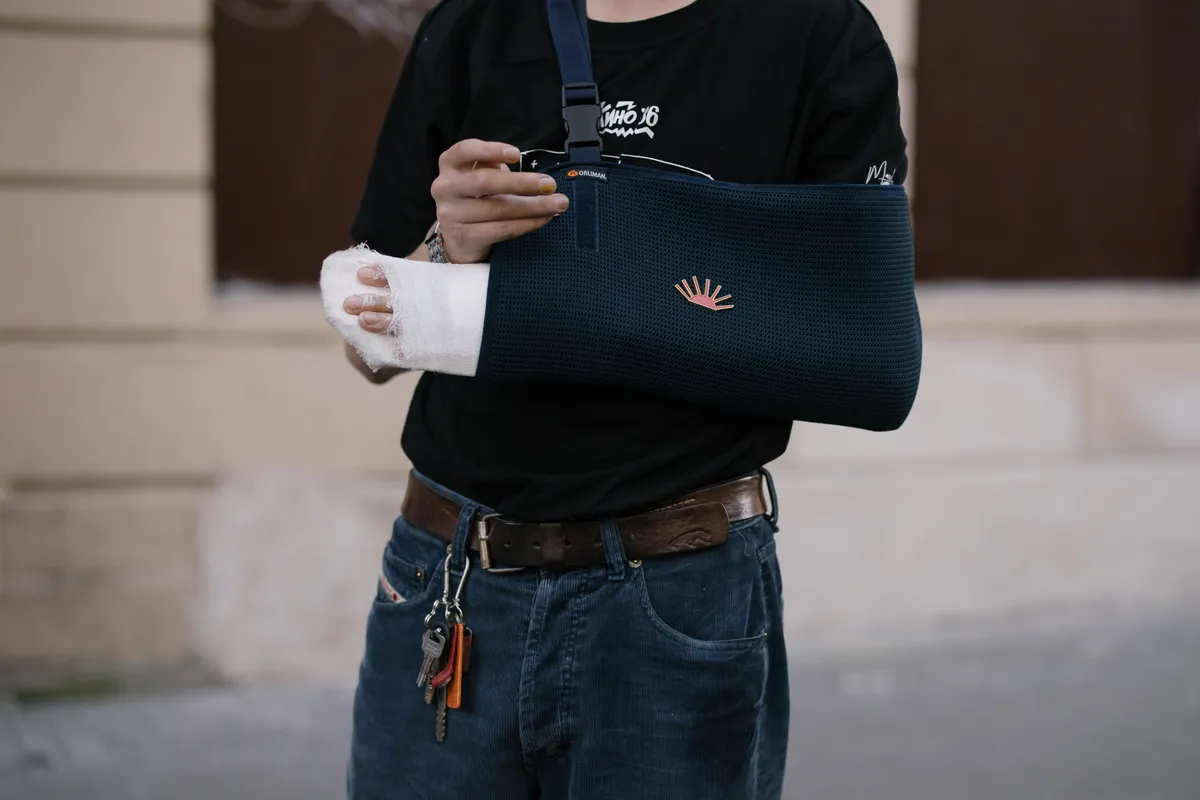
Photo: cottonbro studio / Pexels
Where it broke shapes everything
"Broken arm" means one of three places. The forearm, which has two bones side by side. The upper arm near the shoulder. Or the upper arm near the elbow. Each one heals on its own schedule and gets its own treatment.
In adults, a forearm break often involves both bones. A break right at the wrist has its own guide: A broken wrist: what happens next.
For an older parent, the picture shifts. The surgeons' patient site says older people with osteoporosis (thin, weak bones) are most at risk for severe shoulder breaks. A fall from standing height can be enough. The same goes for the elbow.
Call 911 if bone is coming through the skin, there is heavy bleeding, or the skin below the injury is pale and cold. Other breaks still need prompt care. An X-ray shows the break, and whether the pieces have moved.
One question explains the treatment
Are the pieces still lined up? Doctors call bones that are out of line displaced. That one word drives most of what comes next.
- Forearm. One bone broken and still in line: a cast or brace may be enough. Both bones broken: usually surgery with plates and screws.
- Near the shoulder. Most heal without surgery if the pieces aren't badly out of line. Surgery means plates, screws or pins, or a shoulder replacement.
- Near the elbow. If the pieces have moved, usually surgery with plates and screws. Severe cases may need an elbow replacement.
INSIDER TIP
Ask to see the X-ray, and ask the surgeon to point to the break. Then ask: "Is it displaced?" Write the answer down. You will want it again when the bills and the therapy plan arrive.
The bone heals. The joints are the work.
A cast or sling keeps the bone still. The joints around it lose motion while they wait. That stiffness is the part that needs you.
The healing clocks are long. A forearm takes 3 to 6 months to fully heal, with a cast or brace for 2 to 6 weeks or more after surgery. Near the shoulder, improvement can keep coming for up to 12 months. Near the elbow, most people are back to normal activities in about 6 months. Full healing can take up to 2 years.
Timing for movement depends on the break. After a forearm break, rehab usually starts after a few weeks of keeping the arm still. After elbow surgery, motion exercises can start very early, sometimes the next day. The surgeon decides when. Your job is to ask, then do the home exercises.
The honest news: some stiffness after a forearm break is common, and it usually doesn't change how the arm works. After an elbow break, many people never get the last few degrees back. That rarely matters for daily life.
A physical therapist works on motion and strength. An occupational therapist works on daily tasks. Our guide to PT and OT after an injury explains who does what and what Medicare pays.
WHERE THIS COMES FROM
Every healing time here comes from OrthoInfo, the patient site of the American Academy of Orthopaedic Surgeons, for that specific break. Emergency and warning signs come from MedlinePlus. Links at the end.
Life with one arm, and what to ask
- Get the sling rules in writing. When to wear it, when it can come off, and which movements are allowed.
- Dressing, bathing, cooking are exactly what occupational therapy helps with. For a parent living alone, ask before discharge, not after.
- Pain medicine. Check with the doctor before over-the-counter pain relievers if there is heart disease, high blood pressure, kidney disease or a history of stomach ulcers.
- Call the provider for a tight, painful feeling, tingling or numbness, red or swollen skin, or movement that gets worse after the splint comes off.
Questions worth asking:
- "Is the break displaced, and is that why you're recommending this treatment?"
- "When can I start moving my fingers, wrist, elbow and shoulder, and what's off limits?"
- "Can occupational therapy start before discharge?"
- "After this fall, should we check bone strength for osteoporosis?"
The 60-second recap
- "Broken arm" means the forearm, near the shoulder, or near the elbow.
- Whether the pieces are out of line (displaced) usually decides cast or sling versus surgery.
- The bone heals over months. Stiff joints are the part that needs work.
- Move early, but only when the surgeon says, and do the home exercises.
- For a parent, ask about occupational therapy and bone strength before going home.