
Injury · Wrist
The wrist "sprain" that's really a break, and what it can signal
You put a hand out to catch yourself. Now the wrist is swollen. Sore. Maybe "just a sprain." Most broken wrists heal well. But two things are easy to overlook: a small bone that hides on the first X-ray, and what a simple fall says about an older parent's bones. Once you know where to look, you know what to ask.
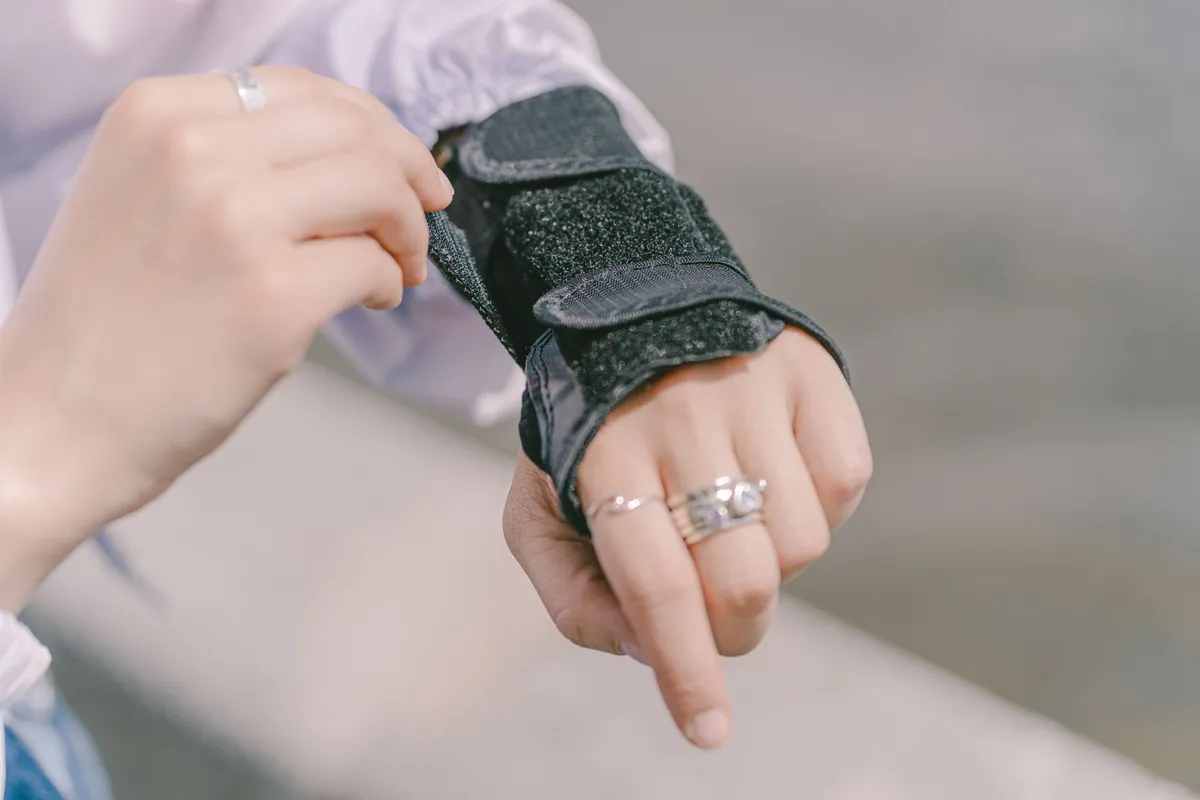
Photo: SHVETS production / Pexels
Two wrist breaks, one kind of fall
The wrist break doctors see most is the end of the radius, the bigger forearm bone, right where it meets the hand. Doctors call it a "distal radius fracture." About 1 in every 6 broken bones treated in the emergency room is this one.
It usually comes from a fall onto an outstretched arm. Younger people often need a hard fall, like a ladder or a bike crash. Over 60, a fall from standing height is often enough.
Now the one that passes for a sprain. The scaphoid is a small bone on the thumb side of the wrist. It breaks in the same kind of fall. The pain can be mild. And it doesn't always show on an X-ray right away.
So the clue is this: a "sprain" that stays swollen and sore just below the base of the thumb, especially when you pinch, grip, push or pull. A doctor may splint it for 2 to 3 weeks, then X-ray again. That second X-ray matters. The scaphoid has a poor blood supply, so it's more likely than many bones to have trouble healing.
Go to the emergency room if any of these happen, even after a cast or splint is on:
- Severe pain that doesn't ease with treatment
- Severe pain when someone gently straightens your fingers
- Weakness or trouble moving the thumb or index finger
- Fingers that are numb or pale
Cast or surgery: how the bone gets held
The goal: get the bone in a good position, then hold it there. If it's already well placed, a cast may be all you need. If it has shifted, the doctor may first gently guide it back into place (a reduction).
If the bone is badly out of place, or won't stay put in a cast, a surgeon may hold it with plates, screws or pins. Which route fits is a conversation for the orthopedic team.
INSIDER TIP
Keep every follow-up X-ray, even when the wrist feels fine. A bone can slip inside the cast during the first weeks. OrthoInfo notes X-rays are often taken every week for the first 3 weeks, then again at 6 weeks.
The healing calendar
These are typical times, not promises. The cast often comes off at about 4 to 6 weeks. Using the wrist for everything usually takes about 3 months.
Full recovery can take up to a year. Stiffness is common and keeps improving for at least 2 years. A scaphoid break can need a cast for up to 6 months.
Therapy usually starts within days to weeks after surgery, or right after the last cast comes off. An occupational therapist may help with everyday tasks like dressing, cooking and writing. For what each kind of therapist does, and what Medicare and other plans pay, see PT and OT after an injury.
WHERE THIS COMES FROM
Medical facts come from OrthoInfo, the American Academy of Orthopaedic Surgeons' patient site. Bone and falls facts come from the NIH, the CDC and Medicare.gov. Links at the end.
For an older parent: the bone-strength question
A fall from standing height should not normally break a healthy bone. When it does, thinning bones (osteoporosis) may be part of the story.
Falls are often kept quiet, too. The CDC reports that more than one in four older adults falls each year, but less than half tell their doctor. So ask two things: why did the fall happen, and how strong are the bones?
Bone density testing. Original Medicare covers a bone mass measurement once every 24 months (more often if medically necessary) for people who meet certain conditions, for example X-rays that show possible osteoporosis. You pay nothing if the provider accepts assignment (agrees to Medicare's set price).
Questions to ask
- "Is the bone in a good position, and does that make a cast or surgery the better fit?"
- "Could this be a scaphoid fracture, and should I come back for another X-ray?"
- "When can therapy start, and with a physical or occupational therapist?"
- "Could this break be a sign of osteoporosis, and does my parent qualify for a bone density test?"
The 60-second recap
- The most common wrist break is the end of the radius, from a fall onto an outstretched hand.
- A "sprain" that stays sore below the thumb could be a scaphoid break hiding from the first X-ray.
- Cast off at about 4 to 6 weeks; everyday use around 3 months; full recovery up to a year.
- Numb or pale fingers, or severe pain that won't ease: go to the ER.
- For an older parent, a wrist break from a simple fall is a reason to ask about bone strength.